

As a supplier of butt splice connectors, ensuring the high - quality insulation of our products is of utmost importance. The insulation quality of a butt splice connector not only affects the performance of electrical connections but also has a direct impact on safety. In this blog, I will share some methods to measure the quality of a butt splice connector's insulation.
Visual Inspection
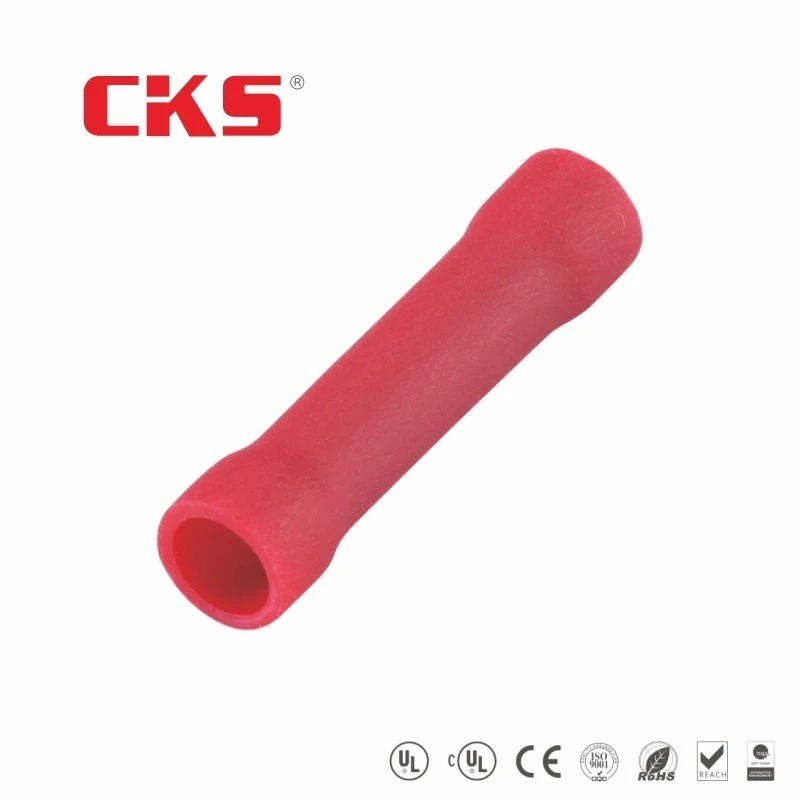
The first step in assessing insulation quality is a simple visual inspection. This is a quick and cost - effective way to identify obvious defects. When you look at the insulation of a butt splice connector, check for cracks, cuts, or any signs of damage. A damaged insulation layer can expose the conducting parts of the connector, leading to short - circuits and safety hazards.
For example, if you notice a crack in the insulation, it could be due to improper handling during manufacturing or transportation. Even a small crack can allow moisture and contaminants to enter, degrading the insulation over time. Also, look for uneven thickness of the insulation. An uneven layer may result in areas of reduced insulation resistance, which can cause problems in electrical performance.
Insulation Resistance Measurement
Insulation resistance is a key parameter in determining the quality of insulation. It measures how well the insulation material resists the flow of electric current. A high insulation resistance value indicates good insulation quality, while a low value may suggest insulation degradation or damage.
To measure the insulation resistance of a butt splice connector, you will need an insulation resistance tester, also known as a megger. First, make sure the connector is disconnected from any power source to avoid electrical shock. Then, connect the tester's leads to the appropriate points on the connector. One lead should be connected to the conducting part of the connector, and the other to a ground or a reference point on the insulation.
Apply a test voltage, typically in the range of 500V to 1000V, depending on the specifications of the connector. The tester will then measure the resistance value. Compare the measured value with the manufacturer's specifications. If the measured resistance is significantly lower than the specified value, it may be a sign of poor insulation quality.
It's important to note that factors such as temperature and humidity can affect insulation resistance. Higher temperatures and humidity levels generally lead to lower insulation resistance values. Therefore, it's advisable to measure insulation resistance under standard environmental conditions or to correct the measured values according to established temperature and humidity correction factors.
Dielectric Withstand Test
The dielectric withstand test, also known as the hipot test, is another important method for evaluating insulation quality. This test determines the ability of the insulation to withstand a high voltage without breaking down.
During the dielectric withstand test, a high voltage is applied to the insulation for a specified period, usually one minute. The applied voltage is typically higher than the normal operating voltage of the connector. For example, if the normal operating voltage of a butt splice connector is 250V, the test voltage may be set at 1000V or higher.
If the insulation is of good quality, it should be able to withstand the test voltage without any breakdown. However, if there are any weak points in the insulation, such as internal voids or impurities, a breakdown may occur. A breakdown is indicated by a sudden drop in voltage or an increase in current flow.
The dielectric withstand test is a more rigorous test than insulation resistance measurement. It can detect potential insulation problems that may not be apparent through visual inspection or insulation resistance measurement alone. However, it should be noted that this test is a destructive test to some extent, as applying a high voltage may cause damage to the insulation if it is already weak.
Partial Discharge Test
Partial discharge is a localized electrical discharge that occurs within the insulation material when the electric field strength exceeds a certain threshold. Partial discharges can cause gradual degradation of the insulation over time, leading to insulation failure.
The partial discharge test is used to detect and measure the occurrence of partial discharges in the insulation of a butt splice connector. Specialized partial discharge measurement equipment is required for this test. The equipment can detect the magnitude and frequency of partial discharges.
During the test, a test voltage is applied to the connector, and the partial discharge activity is monitored. If partial discharges are detected, their characteristics, such as the discharge magnitude and repetition rate, are analyzed. A high level of partial discharge activity may indicate poor insulation quality or the presence of defects in the insulation.
The partial discharge test is a sensitive method for detecting early signs of insulation degradation. It can be used in quality control during the manufacturing process to ensure that the insulation of butt splice connectors meets the required standards.
Chemical Analysis
Chemical analysis can provide valuable information about the composition and quality of the insulation material. By analyzing the chemical properties of the insulation, we can determine if it contains the correct ingredients and if there are any contaminants or impurities.
There are several techniques for chemical analysis, such as Fourier - transform infrared spectroscopy (FTIR) and gas chromatography - mass spectrometry (GC - MS). FTIR can be used to identify the functional groups in the insulation material, which can help to confirm its chemical composition. GC - MS can be used to detect and analyze volatile organic compounds (VOCs) and other contaminants in the insulation.
For example, if the insulation material is supposed to be made of a specific type of polymer, chemical analysis can verify if the polymer is present and if there are any additives or contaminants that may affect its performance. Chemical analysis can also be used to detect signs of aging or degradation in the insulation material, such as the presence of oxidation products.
Comparison with Standards and Competitors
In addition to the above - mentioned testing methods, it's also important to compare the insulation quality of our butt splice connectors with industry standards and the products of our competitors. Industry standards, such as those set by organizations like the International Electrotechnical Commission (IEC) and the American National Standards Institute (ANSI), provide a benchmark for evaluating insulation quality.
By comparing our products with these standards, we can ensure that our butt splice connectors meet the minimum requirements for insulation performance. At the same time, comparing with the products of our competitors can give us an idea of our position in the market. If our connectors have better insulation quality than those of our competitors, it can be a significant selling point.
For instance, if we find that our insulation resistance values are consistently higher than the industry average or the values of our competitors, we can highlight this in our marketing materials. This can help us to attract more customers and gain a competitive edge in the market.
In conclusion, measuring the quality of a butt splice connector's insulation requires a comprehensive approach. Visual inspection, insulation resistance measurement, dielectric withstand test, partial discharge test, chemical analysis, and comparison with standards and competitors are all important methods. As a supplier of butt splice connectors, we are committed to ensuring the high - quality insulation of our products through strict quality control and continuous improvement.
If you are interested in our Non Insulated Butt Splice Connectors, Copper Wire Connector or StepDown Window Butt Connector, or if you have any questions about insulation quality or other aspects of our products, please feel free to contact us for procurement and negotiation. We are always ready to provide you with the best products and services.

References
- International Electrotechnical Commission (IEC) standards on electrical connectors.
- American National Standards Institute (ANSI) standards related to insulation testing.
- Textbooks on electrical insulation materials and testing methods.