

As a seasoned supplier of lipped blade terminals, I understand the critical importance of ensuring the quality and reliability of these components. Lipped blade terminals are widely used in various electrical applications, and their proper functioning is essential for the safety and efficiency of electrical systems. In this blog post, I will share the key inspection items for lipped blade terminals to help you make informed decisions when purchasing these products.
1. Dimensional Accuracy
The first and foremost inspection item for lipped blade terminals is dimensional accuracy. The dimensions of the terminal, including its length, width, thickness, and blade shape, must conform to the specified standards. Any deviation from the standard dimensions can lead to improper fitting, poor electrical contact, or even mechanical failure.
For instance, if the blade width is too large, it may not fit into the corresponding socket, causing loose connections. On the other hand, if the blade is too thin, it may not provide sufficient contact pressure, resulting in high resistance and potential overheating. Therefore, it is crucial to use precision measuring tools, such as calipers and micrometers, to verify the dimensions of the lipped blade terminals during the inspection process.
2. Material Quality
The material used in the manufacturing of lipped blade terminals plays a significant role in their performance and durability. High - quality materials ensure good electrical conductivity, corrosion resistance, and mechanical strength.
Common materials for lipped blade terminals include copper and brass. Copper is known for its excellent electrical conductivity, making it a popular choice for applications where low resistance is required. Brass, on the other hand, offers better mechanical strength and corrosion resistance, which is suitable for harsh environments.
During the inspection, it is necessary to check the material composition of the terminals. This can be done through chemical analysis or by referring to the manufacturer's material certification. Additionally, visual inspection can also reveal signs of material defects, such as cracks, porosity, or impurities.
3. Surface Finish
The surface finish of lipped blade terminals is another important aspect to consider. A smooth and clean surface finish not only enhances the appearance of the terminals but also improves their electrical and mechanical performance.
A good surface finish reduces the contact resistance between the terminal and the mating component, ensuring efficient power transmission. It also protects the terminal from corrosion and oxidation, extending its service life.
Inspect the surface of the terminals for any scratches, dents, or rough areas. These imperfections can cause poor contact and increase the risk of electrical failures. In addition, check for the presence of any plating or coating on the surface. High - quality terminals are often plated with materials such as tin or nickel to improve their corrosion resistance and conductivity.
4. Lip Integrity
The lip of the lipped blade terminal is designed to provide a secure connection and prevent the terminal from accidentally disengaging. Therefore, the integrity of the lip is a critical inspection item.
Check the lip for any signs of damage, such as cracks, breaks, or deformation. A damaged lip may not be able to hold the terminal in place properly, leading to loose connections and potential electrical hazards. The lip should also have the correct shape and size to ensure a proper fit with the mating component.
5. Electrical Performance
The electrical performance of lipped blade terminals is perhaps the most important aspect to evaluate. This includes parameters such as electrical conductivity, insulation resistance, and contact resistance.
Electrical conductivity is a measure of how well the terminal can conduct electricity. High - conductivity terminals ensure efficient power transmission and reduce energy losses. Insulation resistance, on the other hand, measures the ability of the terminal to resist the flow of electric current through the insulation material. A high insulation resistance is essential to prevent electrical leakage and short - circuits.
Contact resistance is the resistance at the interface between the terminal and the mating component. Low contact resistance is crucial for maintaining a stable electrical connection and preventing overheating. Specialized electrical testing equipment, such as multimeters and insulation resistance testers, can be used to measure these electrical parameters during the inspection.
6. Insulation Quality (for Insulated Terminals)
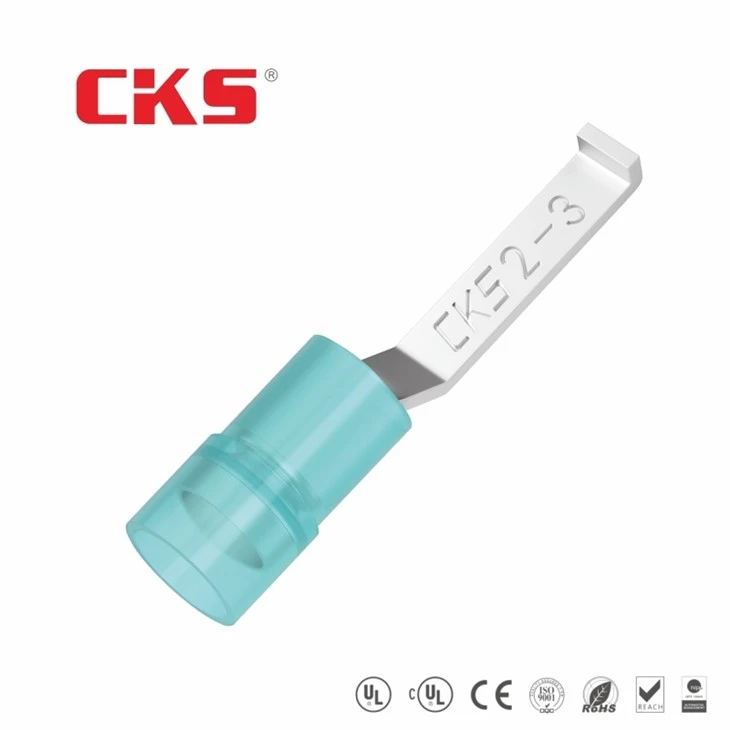
If you are dealing with insulated lipped blade terminals, such as the Insulated Lipped Blade Terminal, the quality of the insulation is of utmost importance. The insulation material should provide reliable protection against electrical shock and short - circuits.
Inspect the insulation for any signs of damage, such as cuts, tears, or cracks. The insulation should also have the correct thickness and dielectric strength to meet the application requirements. In addition, check the adhesion between the insulation and the terminal body. Poor adhesion can lead to the separation of the insulation, exposing the terminal and increasing the risk of electrical hazards.
7. Terminal Strength and Durability
Lipped blade terminals need to withstand mechanical stress during installation and operation. Therefore, their strength and durability are important inspection criteria.

Conduct a mechanical strength test to ensure that the terminals can withstand the forces applied during normal use. This may include tests such as pulling, bending, and torsion. The terminals should not break or deform under these stresses.
In addition, consider the durability of the terminals in different environmental conditions. For example, if the terminals are used in a high - vibration environment, they should be able to resist fatigue and maintain their performance over time.
8. Compatibility with Mating Components
Finally, it is essential to ensure that the lipped blade terminals are compatible with the mating components. This includes checking the size, shape, and electrical characteristics of the terminals to ensure a proper fit and reliable connection.
The terminals should be able to mate with the corresponding sockets or connectors without any difficulty. The contact surfaces should match precisely to ensure good electrical contact. Compatibility issues can lead to poor performance, increased resistance, and potential electrical failures.
As a trusted supplier of lipped blade terminals, we offer a wide range of products to meet your specific needs. Our Insulated NyLon Lipped Blade Tongue Terminal and Non Insulated Lipped Blade Terminals are manufactured with high - quality materials and strict quality control processes to ensure excellent performance and reliability.
If you are interested in purchasing lipped blade terminals or have any questions about our products, please feel free to contact us for a consultation. We are committed to providing you with the best products and services to meet your electrical connection needs.
References
- Electrical Connector Handbook, McGraw - Hill
- Standards for Electrical Terminals, International Electrotechnical Commission (IEC)