

As a supplier of bullet quick disconnects, ensuring the quality and performance of our products is of utmost importance. Testing these components thoroughly helps us maintain high - standards and provide our customers with reliable solutions. In this blog, I'll share the steps and methods I use to test a bullet quick disconnect.
1. Visual Inspection
The first step in testing a bullet quick disconnect is a simple yet crucial visual inspection. I carefully examine the physical structure of the connector. Check for any visible signs of damage such as cracks, deformities, or scratches on the insulating material. For example, in our Double Crimp Bullet Connectors, the double - crimp design should be intact, without any signs of loosening or improper crimping.

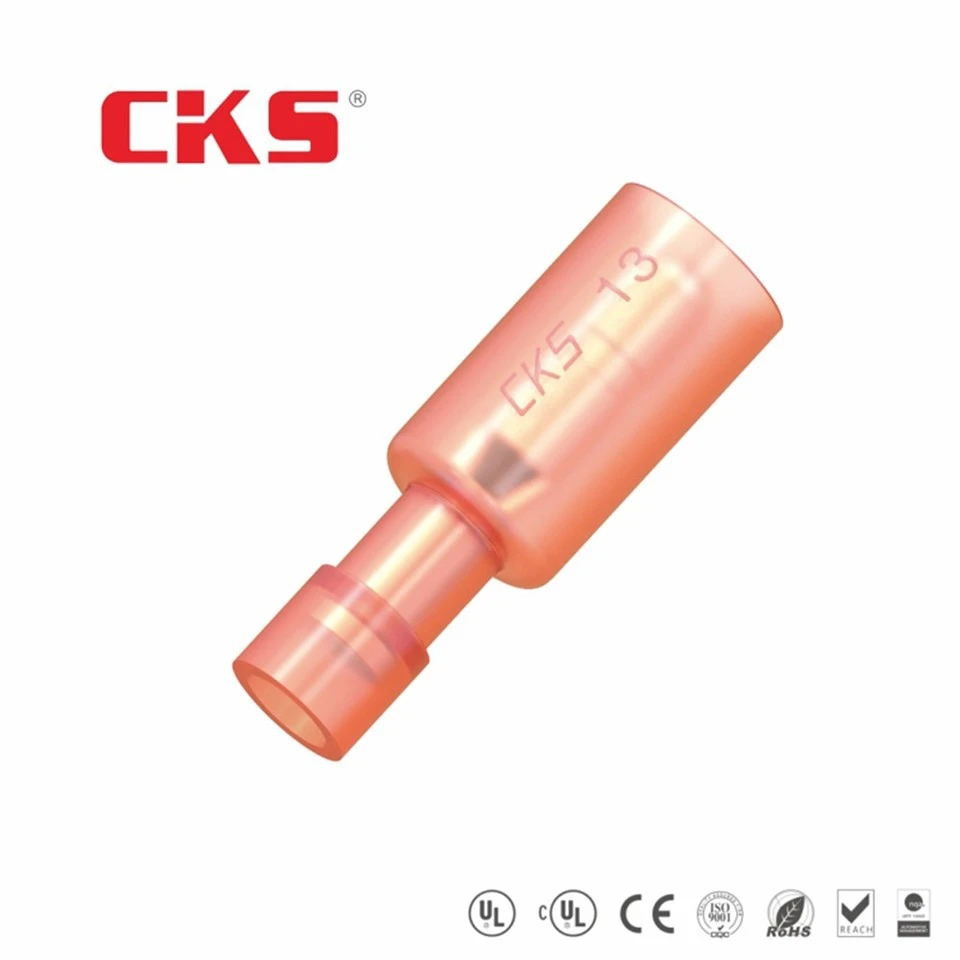
Inspect the metal parts of the bullet quick disconnect as well. Look for rust, oxidation, or any foreign particles that could affect the electrical conductivity. The surface of the metal should be smooth and free from burrs, which might cause short - circuits or poor connections. A damaged or dirty connector can lead to power loss, overheating, and even system failures. So, a detailed visual check sets a good foundation for further testing.
2. Dimensional Check
Accurate dimensions are essential for a proper fit and connection of bullet quick disconnects. I use precision measuring tools like calipers to measure the key dimensions of the connector. This includes the diameter of the bullet part, the length of the connector, and the thickness of the insulation.
For instance, in our Bullet Electrical Quick Disconnect Fully Insulated, the insulation thickness needs to meet specific standards to provide adequate protection. If the dimensions deviate from the specified values, it can result in a loose or tight fit when connecting to other components, leading to unstable electrical connections. By ensuring that all dimensions are within the acceptable tolerance range, we can guarantee that the connectors will work properly in various applications.
3. Electrical Continuity Testing
Electrical continuity is a fundamental property of bullet quick disconnects. To test this, I use a multimeter set to the continuity or resistance mode. First, I connect the probes of the multimeter to the two ends of the bullet quick disconnect. A low resistance reading (ideally close to zero ohms) indicates good electrical continuity.
If the resistance is too high, it means there is a problem with the electrical path inside the connector. This could be due to a poor crimp, a break in the metal conductor, or an internal short - circuit. For example, in PVC Vinyl Insulated Bullet Connector, any damage to the metal core under the PVC insulation can disrupt the electrical flow.
I also test the continuity under different conditions, such as when the connector is fully inserted and when it is partially disconnected. This helps to simulate real - world usage scenarios and ensures that the connection remains stable during normal operation.
4. Insulation Resistance Testing
Insulation resistance is another critical parameter to test. A high insulation resistance is necessary to prevent electrical leakage and short - circuits between different conductors. I use an insulation resistance tester, also known as a megger, to measure the insulation resistance of the bullet quick disconnect.
I apply a specific test voltage (usually in the range of 500V to 1000V) across the metal conductor and the outer insulation. A good insulation resistance value should be in the order of megohms. If the measured value is too low, it indicates that the insulation is damaged or contaminated, which can pose a safety hazard.
This test is especially important for our fully - insulated bullet quick disconnects, as they are designed to provide reliable electrical isolation. By regularly testing the insulation resistance, we can ensure that our products meet the safety and performance requirements of our customers.
5. Pull - Out Force Testing
The pull - out force of a bullet quick disconnect is an important indicator of its mechanical strength and connection reliability. I use a pull - testing machine to measure the force required to separate the male and female parts of the connector.
A proper pull - out force ensures that the connector stays connected during normal operation but can still be easily disconnected when needed. If the pull - out force is too low, the connector may come loose accidentally, causing power interruptions. On the other hand, if the pull - out force is too high, it can be difficult for users to disconnect the connector, which may lead to damage to the connector or other components.
I test the pull - out force according to industry standards and compare the results with our product specifications. This helps us to optimize the design and manufacturing process to achieve the ideal pull - out force for our bullet quick disconnects.
6. Temperature Cycling Testing
In real - world applications, bullet quick disconnects may be exposed to a wide range of temperatures. Temperature cycling testing simulates these conditions to evaluate the performance of the connector under thermal stress.
I place the bullet quick disconnect in a temperature - controlled chamber and subject it to a series of temperature cycles. The temperature range typically varies from a low temperature (e.g., - 40°C) to a high temperature (e.g., 125°C). Each cycle consists of a heating phase, a holding phase at the high temperature, a cooling phase, and a holding phase at the low temperature.
During temperature cycling, the materials of the connector expand and contract, which can cause mechanical stress and affect the electrical properties. By monitoring the electrical continuity and insulation resistance during the temperature cycling process, I can detect any potential problems, such as loosening of the crimp, cracking of the insulation, or changes in the electrical conductivity. This test helps us to ensure that our bullet quick disconnects can withstand harsh environmental conditions.
7. Salt Spray Testing
For applications in corrosive environments, such as marine or industrial settings, salt spray testing is essential to evaluate the corrosion resistance of the bullet quick disconnect. I place the connector in a salt spray chamber and expose it to a fine mist of saltwater solution (usually a 5% sodium chloride solution) for a specified period (e.g., 24 hours, 48 hours, or 72 hours).
After the test, I remove the connector from the chamber and examine it for signs of corrosion. Corrosion can damage the metal parts of the connector, reducing its electrical conductivity and mechanical strength. By conducting salt spray testing, we can select the appropriate materials and surface treatments for our bullet quick disconnects to ensure long - term reliability in corrosive environments.
Conclusion
Testing a bullet quick disconnect is a comprehensive process that involves multiple steps and methods. From visual inspection to various electrical and mechanical tests, each step plays a crucial role in ensuring the quality and performance of our products. As a supplier, we are committed to providing our customers with high - quality bullet quick disconnects that meet their specific requirements.
If you are interested in our bullet quick disconnect products or have any questions about their performance and testing, please feel free to contact us for procurement and further discussions. We look forward to collaborating with you to meet your electrical connection needs.
References
- Electrical Connector Handbook, McGraw - Hill
- Standards for Electrical Insulation Testing, IEEE