

Hey there! I'm running a pin terminal supply business, and today, I wanna have a deep chat about the frequency response of pin terminals. You might be wondering, "What on earth is frequency response?" Well, stick around, and I'll break it down for you.
First off, let's understand what frequency response means in the context of pin terminals. In simple terms, frequency response refers to how a pin terminal behaves when subjected to different frequencies of electrical signals. Different frequencies can have various effects on the performance of the terminal, and it's crucial to grasp these interactions, whether you're in the electronics design game or just someone curious about how these little components work.

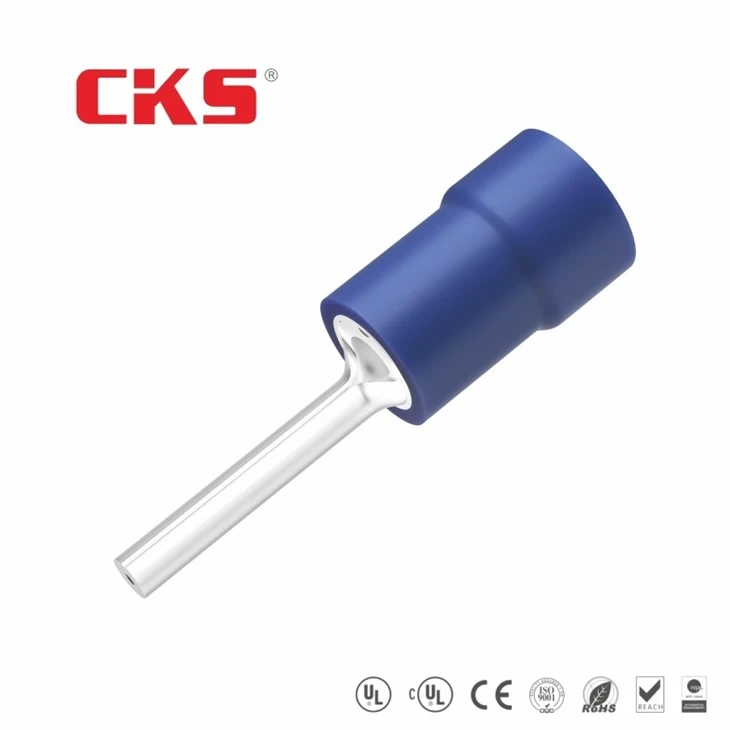
Now, let's talk about why frequency response matters. In modern electronics, we're dealing with all sorts of signals, from low - frequency power signals to high - frequency communication signals. The frequency response of a pin terminal can significantly impact signal integrity. If a terminal has a poor frequency response, it can cause signal distortion, attenuation, or even interference. This is a big deal because it can lead to malfunctions in electronic devices, reduced performance, and in some cases, complete system failures.
For example, in high - speed communication systems like 5G networks or data centers, the signals are transmitted at very high frequencies. In these scenarios, the pin terminals need to have excellent frequency response to ensure that the data is transmitted accurately and without any loss. Any issues with the frequency response can result in slow data transfer speeds, dropped connections, or errors in the data stream.
One of the main factors that affect the frequency response of a pin terminal is its physical design. The length, diameter, and material of the pin can all play a role. A longer pin, for instance, can introduce more inductance and capacitance, which can limit the high - frequency performance of the terminal. Inductance can cause the terminal to resist changes in current at high frequencies, while capacitance can store and release electrical charge, leading to signal delays and distortion.
The material of the pin also matters. Different metals have different electrical properties. For example, copper is a popular choice for pin terminals because it has good electrical conductivity. However, its frequency response can be affected by factors like its purity and surface finish. A high - purity copper pin with a smooth surface finish will generally have better high - frequency performance compared to a lower - quality copper pin.
Another important factor is the insulation around the pin terminal. We offer a variety of insulated pin terminals, such as Insulated NyLon Pin Tongue Terminal and Insulated PVC VINYL Pin Terminal. The insulation material can affect the capacitance of the terminal. If the insulation has a high dielectric constant, it can increase the capacitance, which in turn can degrade the high - frequency response. On the other hand, a good insulation material can also protect the pin from environmental factors like moisture and dust, which can indirectly affect its frequency response over time.
Non - insulated pin terminals, like our Non Insulated Pin Terminals, have their own characteristics when it comes to frequency response. Without the insulation, there's less capacitance introduced by the insulation material. However, they are more vulnerable to environmental factors and short - circuits, which can also impact their performance at different frequencies.
As a pin terminal supplier, we conduct rigorous testing to ensure that our products have excellent frequency response. We use specialized equipment to measure the terminal's performance at different frequencies and make adjustments to the design and manufacturing process as needed. This helps us to meet the high - standards required by our customers in various industries, from automotive to aerospace.
We also understand that different applications have different frequency requirements. For low - frequency applications, like power distribution in a home electrical system, the frequency response requirements are not as strict as in high - frequency applications. In these cases, our non - insulated pin terminals might be a cost - effective and reliable choice. But for high - frequency applications, we recommend our insulated pin terminals with carefully selected materials and designs to ensure optimal performance.
If you're in the market for pin terminals and are concerned about frequency response, we're here to help. We have a team of experts who can provide you with detailed information about our product's frequency response characteristics and help you choose the right terminal for your specific application. Whether you need a large quantity for a mass - production project or just a few samples for testing, we can accommodate your needs.
In conclusion, understanding the frequency response of pin terminals is essential for ensuring the proper functioning of electronic devices. As a pin terminal supplier, we're committed to providing high - quality products with excellent frequency response. If you have any questions or are interested in purchasing our pin terminals, don't hesitate to reach out and start a conversation about your procurement needs. We're here to make sure you get the best pin terminals for your projects.
References
- Electrical Engineering textbooks on signal integrity
- Industry reports on high - frequency electronics components